
A Delaware house does not need a new kitchen, perfect paint, or a finished repair list before you can offer it for sale. Perhaps the roof is nearing the end of its life, an inherited home has been vacant for months, or a contractor’s estimate is higher than the money you can comfortably spend. You may prefer to sell the property in its current condition rather than manage another project.
You can generally sell a house as-is in Delaware without completing repairs first. But “as-is” is a term that needs to be reflected in the purchase agreement. It does not erase known-defect disclosure duties, guarantee that a mortgage lender will approve the property, or require a buyer to accept every problem without question.
This guide focuses on the sale itself: how as-is agreements work, what sellers must disclose, which buyers can purchase a property in its existing condition, and how to compare your actual proceeds.
What Does Selling a House As-Is Mean in Delaware?
An as-is sale generally means the buyer agrees to purchase the real estate in its agreed existing condition, subject to the contract’s provisions. The seller may not be required to perform repairs that a traditional buyer might request. However, the exact obligations depend on the language both parties sign.
Three things are separate: the home’s physical condition, what the seller knows and discloses, and what the contract requires before settlement. A buyer might accept an outdated heater yet request a credit for unsafe wiring.
As-is does not necessarily mean “no inspections.” A contract can still allow inspections, title review, financing contingencies, or cancellation within specified deadlines. Nor does the phrase automatically authorize leaving furniture, vehicles, or other personal property behind. Put any agreement about remaining belongings in writing.
Do You Have to Make Repairs Before Selling As-Is in Delaware?
Delaware does not impose a universal requirement that every home be renovated to move-in-ready condition before resale. A sale may proceed despite worn finishes, an aging roof, or deferred maintenance if the buyer accepts the terms and applicable legal requirements are satisfied.
There are limits. Existing code-enforcement orders, unsafe conditions, permit requirements, or agreements with a buyer can create obligations that cannot be bypassed simply by advertising “as-is.” Serious hazards may restrict access or occupancy. An active leak can continue damaging the structure even while the house is listed.
Before you stop all maintenance, distinguish cosmetic work from damage that is actively getting worse. Repainting may be optional; safely shutting off a leaking water line could prevent thousands in additional loss. If a governmental notice has been issued, obtain the exact order and ask the relevant authority or a Delaware attorney how it affects the proposed transfer.
What Must a Delaware Seller Disclose in an As-Is Sale?
An as-is contract is not a substitute for the required seller disclosures. Under 6 Del. C. §§ 2572–2573, covered residential sellers must disclose known material defects in writing, with updates for material changes before final settlement. The required report goes to prospective buyers or their agents before the buyer makes an offer.
Use the Delaware Real Estate Commission’s Seller’s Disclosure of Real Property Condition Report, effective August 1, 2026. Its questions address the structure, systems, water intrusion, prior work, and other property conditions. Answer honestly from what you know; an uninspected component should not be presented as problem-free.
For example, a homeowner in Dover knows a section of ceiling stains after heavy rain. The stains were painted, but the roof was never repaired. Describing the roof as having no known problems would be misleading even if the buyer agrees to purchase as-is.
Delaware also requires covered sellers to provide available information about radon testing and known hazards under § 2572A. Most pre-1978 housing is subject to separate federal lead-based paint disclosure rules, including an inspection opportunity unless properly waived or modified.
Some transactions qualify for statutory disclosure exemptions, including certain court-related or fiduciary transfers. Do not assume every inherited or investor purchase is exempt. Ask a Delaware attorney about your actual transfer.
What Kinds of Houses Can Be Sold As-Is?
There is no single definition of a house that needs “too much work.” Buyers price both visible repairs and uncertainty about what they cannot yet inspect. A dated house differs from one with active basement flooding or structural movement.
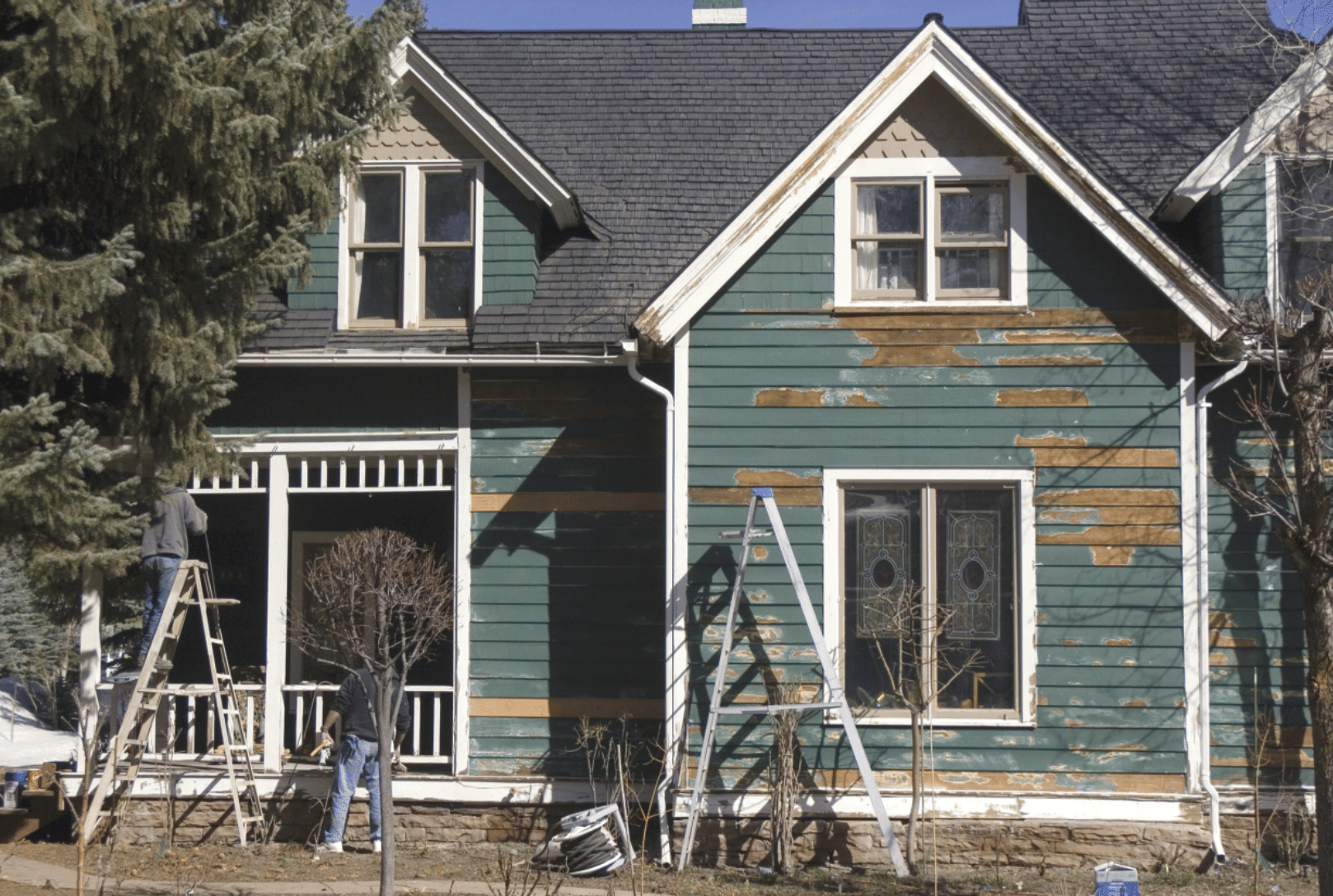
Common as-is situations include an aging roof, moisture or mold damage, outdated electrical systems, failed inspections, unfinished renovations, and inherited homes with years of accumulated belongings.
These require different responses. Our Bear major-repairs guide explains how repair expenses can affect selling options. The Seaford water-damage guide examines moisture problems and related selling risks. For significant structural concerns, read our New Castle foundation guide.
If the property has open permit questions, see selling with unpermitted work in Newark. For a house with extensive contents, our Newark hoarder-house guide covers ownership and removal agreements.
Identify each defect, what is known about its scope, and who might accept it.
Three Ways to Sell a Delaware House As-Is
1. List With a Real Estate Agent
An agent can market an as-is property to a broad pool of buyers and help evaluate comparable sales. You may still have showings, inspections, financing contingencies, and negotiated brokerage compensation. Make sure listing descriptions accurately disclose the condition rather than promising repairs you do not intend to complete.
An as-is listing does not force every buyer to overlook defects. Some will ask for credits or exercise inspection rights; those possibilities should be addressed in the contract.
2. Sell For Sale By Owner
You can market the house directly, arrange appointments, negotiate, and retain a Delaware attorney for the settlement work. This saves a listing-side commission but leaves pricing and screening to you. Holding time and concessions still matter.
Our Delaware FSBO guide explains that process in detail. FSBO describes who handles the sale; as-is describes the property’s agreed condition. They are not interchangeable.
3. Request a Direct Cash Offer
Some professional buyers evaluate homes requiring significant repairs and make offers based on current condition, likely renovation expenses, resale risk, and their business costs. A direct sale may avoid public marketing and some seller-funded work, depending on the agreement.
Cash eliminates a buyer’s mortgage contingency only if the contract actually has none. It does not eliminate title review, legal settlement, or every possible inspection. Ask whether the buyer purchases directly or intends to assign the contract, and verify exactly which closing expenses and belongings they will accept.
You can review how Dynamic Property Solutions buys houses before deciding whether to request an offer.
Can an As-Is Buyer Still Get a Mortgage or Insurance?
Sometimes. The financing decision depends on property condition, the loan program, appraisal findings, and lender requirements. Minor cosmetic defects may be acceptable; significant safety, soundness, or structural concerns may require repairs before a mortgage can close. An appraisal is not a substitute for a full home inspection.
An insurer may independently require information about an aging roof, water damage, or other hazards. A buyer who qualifies financially may still struggle to obtain coverage acceptable to the lender.
Ask the buyer to confirm the actual lender and insurance requirements before negotiating a repair credit. A credit is not necessarily a solution when the lender requires completed work. Fannie Mae’s property-condition guidance explains when conventional-loan appraisals can be completed as-is.
For an example of how inspection findings can alter an existing deal, see our Newark failed-inspection guide.
How Do You Price a House Without Making Repairs?
Start with recent comparable sales of similarly located homes, then adjust for differences in condition, amenities, and likely buyer pool. Comparing a damaged home to a newly renovated sale without accounting for the repairs can produce an unrealistic asking price.
Obtain written estimates for major known issues where safe and practical. Separate the estimated direct repair cost from the buyer’s uncertainty, carrying expenses, permits, and possible financing limitations. A buyer may reduce an offer by more than a contractor’s quote if the work is risky or prevents an ordinary mortgage purchase.
Check county property records for context, including New Castle County property services, Kent County records, and Sussex County mapping. These are research tools, not appraisals.
If a home has unusual damage or few comparable sales, an independent valuation may be worthwhile. A realistic price is one that fits the home as it stands today, not the amount you spent renovating it years ago.
How to Sell an As-Is House: A Practical Delaware Process
1. Document the condition. Photograph accessible areas, collect inspection reports, receipts, warranties, permits, and any notices from local authorities. Do not enter unstable or contaminated areas for photographs.
2. Confirm ownership and payoff amounts. Find the deed, check who must sign, and request mortgage and home-equity payoff statements. Resolve questions about liens or estate authority before promising a settlement date.
3. Choose your sales route. Obtain a suggested listing range or an independent valuation, and compare it with any written direct offers. Do not sign an exclusive agreement until you understand its term and fees.
4. Deliver applicable disclosures. Use Delaware’s current forms, answer accurately, and update relevant changes. Include known issues even when the buyer plans to renovate.
5. Review contingencies carefully. The agreement should specify inspections, financing, personal property, agreed repairs or credits, earnest money, possession, and any right to terminate. An as-is label alone is too vague.
6. Prepare for attorney-led settlement. A Delaware-licensed attorney must handle the legal real estate settlement. The Delaware Supreme Court’s Mid-Atlantic Settlement decision explains the attorney requirement. Review estimated proceeds, title work, and wiring instructions using independently verified contact information.
Keep written records of ownership, contract, and closing obligations.
What If the Property Has Code Violations, Unpermitted Work, or Septic Problems?
An as-is agreement does not make an outstanding municipal order disappear. A code-enforcement notice may require action by a deadline or limit occupancy. Verify whether the property falls inside a municipality or under county jurisdiction; a mailing address alone does not establish the responsible office.
When previous additions or conversions lack permits, the scope and required corrections can affect price and settlement. A prospective buyer may accept the risk, but do not claim improvements were approved without documentation.
Private septic systems deserve separate attention. Delaware has transfer-related inspection requirements and exceptions; check the DNREC on-site wastewater program before advertising a property as ready to close. If an inspection identifies problems, clarify how the findings affect the agreed price, responsibility for further evaluation, and any conditions that must be satisfied before settlement.
For severe moisture damage, our Seaford water-damage article offers a more focused framework. Sellers should avoid hiding active hazards simply to make photographs look cleaner.
Can You Sell As-Is With Tenants, an Estate, or Mortgage Problems?
Yes, in some circumstances, but these are ownership and occupancy questions, not merely repair questions.
If someone occupies the home, identify whether they are an owner, tenant, or family member with rights to possession. Do not change locks, dispose of belongings, or promise the buyer a vacant property without resolving those rights. The lease and the purchase agreement should determine what happens at closing.
For an inherited house, confirm that the person signing has authority to sell and to make decisions about contents. Read our Smyrna inherited-house guide for estate-related considerations.
If you are behind on the mortgage, a sale can be time-sensitive. Listing as-is does not pause a foreclosure or guarantee enough proceeds to satisfy the loan. Contact the servicer, obtain a current payoff, and discuss deadlines with appropriate counsel. Our Wilmington foreclosure guide addresses that situation.
Delaware Costs: What Do You Still Pay When Selling As-Is?
Not paying for repairs is only one part of the calculation. You may still incur brokerage compensation, marketing, attorney and settlement charges, transfer taxes, mortgage payoff amounts, negotiated credits, and holding costs.
Delaware’s realty transfer tax statute generally imposes a 2.5% state rate where the locality imposes the authorized 1.5% rate, resulting in a combined 4% tax. Other local arrangements and exemptions can apply. The negotiated or legally applicable allocation determines what you pay—not the word as-is.
At a $300,000 price, a 4% combined transfer tax totals $12,000. If seller and buyer each bear half under the agreement, the seller’s illustrative share is $6,000. Confirm actual figures with the settlement attorney and the Delaware Division of Revenue.
Ask for an itemized seller net sheet before accepting an offer. “No repair costs” can be valuable, but it does not automatically create the highest proceeds.
Delaware Cost Comparison: Repair vs. Sell As-Is vs. Cash Offer
Consider a hypothetical Milford homeowner with an older roof, worn interior finishes, and a mortgage payoff of $175,000. The owner compares three approaches.
These figures are hypothetical—not local market averages, standard fees, contractor quotes, or an actual offer.
| Financial factor | Repair and list | List as-is | Direct cash offer |
|---|---|---|---|
| Expected price | $350,000 | $319,000 | $291,000 |
| Mortgage payoff | $175,000 | $175,000 | $175,000 |
| Repairs and preparation | $26,000 | $1,500 | $0 |
| Brokerage, transfer and settlement costs | $24,000 | $21,000 | $0 |
| Holding costs | $6,000 | $4,500 | $1,500 |
| Estimated net proceeds | $119,000 | $117,000 | $114,500 |
For the direct offer, this illustration assumes the buyer expressly agrees to pay the seller’s usual transfer and settlement expenses and that no agent compensation is due. These terms must be confirmed in writing, not presumed.
Repairing produces $2,000 more than listing as-is in this example, but that small advantage could disappear if hidden damage adds a few thousand dollars. The direct route nets less but avoids the estimated repair project and marketing process.
Use a real contractor quote, current payoff, written buyer terms, and settlement estimates to create your own comparison. Gross price is not the same as money received at closing.
Before You Sign With an Investor: Delaware’s 2026 Wholesaling Rules
A buyer planning to purchase and take title is not necessarily a wholesaler. Some businesses instead contract for a property and seek to assign their interest to another buyer for compensation. That distinction matters in Delaware.
Under 24 Del. C. § 2940, a seller in a covered wholesale transaction has specific disclosure and nonwaivable cancellation rights. The law includes a right to cancel until midnight of the 21st calendar day after executing the compliant agreement, or until conveyance, whichever occurs first. A contract missing the required disclosures can be canceled before conveyance. These requirements took effect August 30, 2026.
The required disclosures also inform sellers that they may seek an independent property appraisal and consult an unaffiliated real estate professional or Delaware attorney before or after signing the agreement.
Ask whether the buyer intends to close in its own name or transfer the contract, and have Delaware counsel review the paperwork. Do not assume every direct as-is purchase is a wholesale transaction.
Common As-Is Selling Mistakes to Avoid
- Hiding defects: Disclose known problems even if the buyer plans repairs.
- Assuming “as-is” means “no inspections”: Read the inspection and termination clauses.
- Ignoring ownership or permits: Resolve legal authority and outstanding orders early.
- Comparing offer prices alone: Include taxes, settlement costs, holding expenses, and concessions.
- Leaving belongings without agreement: Specify who removes or accepts personal property.
- Believing cash guarantees closing: Verify funds, contract terms, and title work.
Frequently Asked Questions About Selling a House As-Is in Delaware
Can I sell my house as-is in Delaware without fixing anything?
Often yes, if the buyer agrees and legal requirements are met. Existing orders, safety issues, or contract terms may still require action.
Do I have to disclose problems when selling as-is in Delaware?
Generally yes. Covered sellers must disclose known material defects using Delaware’s required report, subject to statutory exemptions.
Will buyers inspect a house listed as-is?
They may. An as-is listing does not automatically remove inspection rights or contingencies in the purchase contract.
Can a buyer get a mortgage on an as-is property?
Possibly. The lender, loan program, insurer, and condition determine whether repairs or additional evaluations are required.
Do I have to pay closing costs on an as-is sale?
Potentially. Taxes and settlement charges still arise. Who pays depends on applicable law and the written agreement.
Can I leave unwanted furniture when I sell as-is?
Only if the buyer agrees to accept specified belongings. Document what stays, what goes, and who handles removal.
Can I sell an inherited Delaware house as-is?
Potentially, once the seller has legal authority and any estate, title, and contents issues are addressed.
Is selling to a cash buyer better than listing as-is?
Not automatically. Compare written net proceeds, contingencies, repair obligations, and realistic settlement timing.
Compare Your Options for Selling a House As-Is in Delaware
An as-is sale gives you a way to consider selling without funding every improvement. It is not a promise that any buyer must accept the condition, nor a shortcut around disclosures or the contract. The strongest decision starts with clear facts about the house and the net proceeds you can reasonably expect.
Dynamic Property Solutions considers purchasing homes across Delaware in a range of conditions, including properties with substantial repair needs. Any purchase depends on the condition, ownership, title, and agreed terms. We can discuss which belongings may remain and what expenses would be covered under a written offer.
See our Delaware service areas, request a no-obligation offer, or contact our team. You can also call (302) 222-2901 to discuss the property.
You do not need to make the house perfect before finding out what your selling options are.
Disclaimer: This guide provides general education, not legal, financial, tax, environmental, or brokerage advice. Disclosure obligations, wholesaling rules, safety requirements, transfer taxes, and settlement responsibilities depend on the transaction. Consult qualified Delaware professionals when appropriate.